






News
Paper Plates vs Plastic Plates: Which Should You Buy?
Nov
It sounds like the simplest decision in the store — until a plate buckles under barbecue ribs or soaks through beneath a pasta dinner. The paper plates vs plastic plates debate has a real answer, but it depends on what you are serving, where, and to how many people. This comparison covers strength, cost, cleanup, and storage so you can stock the right plate for each job instead of forcing one material to do everything.
If you are building a full stock-up rather than solving a single meal, our guide to bulk disposable essentials shows where plates fit alongside cups, cutlery, and cleanup supplies.
Strength and Saucy Foods
Plastic plates are the rigidity champions. A hard plastic plate stays flat under a heavy steak, a pile of ribs, or a saucy curry, and it will not soften no matter how long the meal lasts. That makes plastic the default for standing-up eating — buffets, food trucks, and events where guests balance a plate on their lap or in one hand.
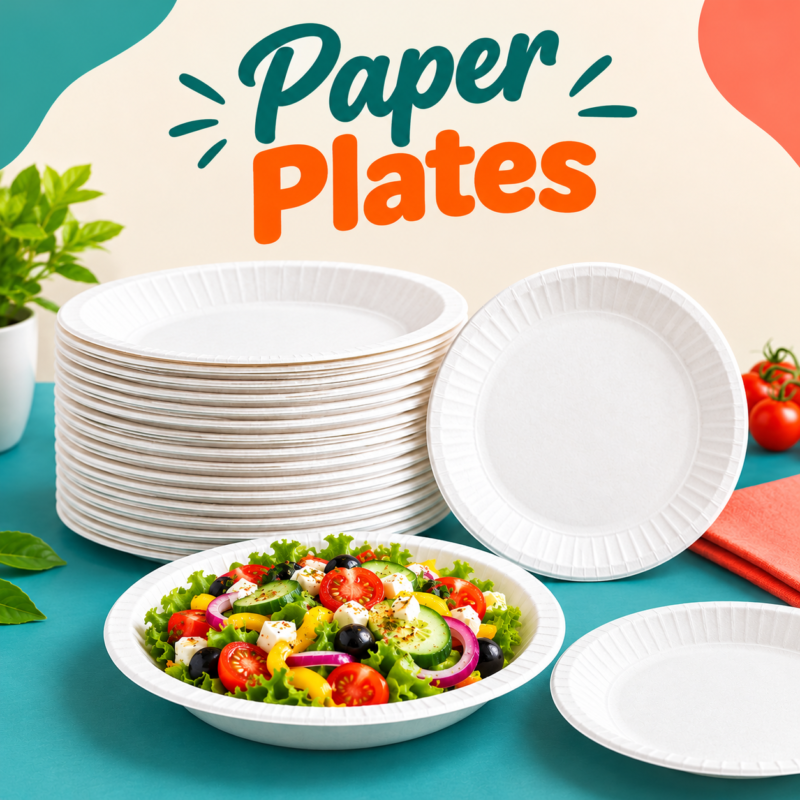
Paper plates have closed the gap more than most people expect. Heavyweight paper with a soak-resistant coating handles hot food, dressings, and moderate sauces without leaking, and it will not crack if dropped. Where basic paper still loses is time: a very wet dish left sitting for an hour will eventually soften an uncoated plate. For a normal meal eaten at a normal pace, good paper is more than strong enough — and it never shatters.
The knife test
Cutting food is where the difference shows most. Plastic shrugs off steak knives. Coated heavyweight paper handles ordinary cutting fine, but enthusiastic sawing on a thin paper plate can score the surface. If your menu involves cutting meat on the plate, lean plastic or premium paper.
Cost, Counts, and Everyday Value
Per plate, basic paper is usually the cheaper option, which is why it dominates everyday family use, school events, and office lunches. Plastic costs more per piece but often replaces two paper plates in situations where people would double up a flimsy one for security — and one sturdy plate is cheaper than two weak ones.
Buying in bulk narrows the gap further. Large packs of either material bring the per-plate cost down sharply compared with small grocery-store packs, which is exactly why households that entertain often keep both on the shelf: paper for the week, plastic for the weekend crowd. You can compare the current ranges directly — browse paper plates for everyday and premium options, and plastic plates for the rigid, reusable-feel end of the shelf.
Cleanup, Storage, and Everyday Convenience
Both materials win the main event: no washing up. Beyond that, paper is lighter and stacks flatter, so a big pack takes minimal closet space and adds almost nothing to the trash bag’s weight. Paper is also the quieter option — no clatter when stacks are handled, which matters at events with speeches or sleeping children nearby.
Plastic plates stack neatly too, and their stiffness makes them easier to carry to an outside bin without spills. One honest note: plastic plates that held greasy food are messier in the bin than paper, which tends to absorb some of the residue. Neither requires rinsing before disposal for household use.
Which One for Which Job?
Everyday family dinners, snacks, and sandwiches: paper, in a good heavyweight grade. Formal events where looks matter: either works — our guide to disposable plates for weddings and big events shows how both materials dress up. Heavy, saucy, or knife-heavy menus: plastic. Soups and saucy sides served in the hand: consider pairing plates with dedicated disposable bowls rather than asking any plate to contain liquid.
If you only buy one
Choose heavyweight coated paper plates in a dinner size. They cover the widest range of meals, handle heat well, store flat, and cost the least per use. Add one pack of plastic plates later for barbecues and big gatherings. For a deeper dive into paper specifically — sizes, coatings, and counts — see the dedicated disposable paper plates buying guide.
Frequently Asked Questions
Are paper plates safe in the microwave?
Plain paper plates are generally suitable for short reheats; plastic plates usually are not designed for microwaving. Always check the packaging for the specific product, reheat in short bursts, and never microwave a plate printed with metallic decoration.
Which option is easier on the environment?
Neither is impact-free, but uncoated paper generally breaks down faster after disposal, and compostable paper options exist for settings with composting facilities. The most practical step either way is buying the right grade once, instead of doubling up flimsy plates.
Can plastic plates be washed and reused?
They are designed and sold as single-use, and that is how they should be treated at events and businesses. At home, many people do rinse and reuse sturdy plastic plates a few times for dry snacks — just inspect for cracks and warping first.
Stock Both, Stress Less
Paper for the everyday, plastic for the heavy lifting — that simple split covers nearly every meal a household or small business serves. Shop paper and plastic plates at Techlenze and build your stock in one order: delivery is same-day or next-day across the USA, shipping is free at $75 or more, and just $2.99 under that.
Related Guides
